One click to the ID
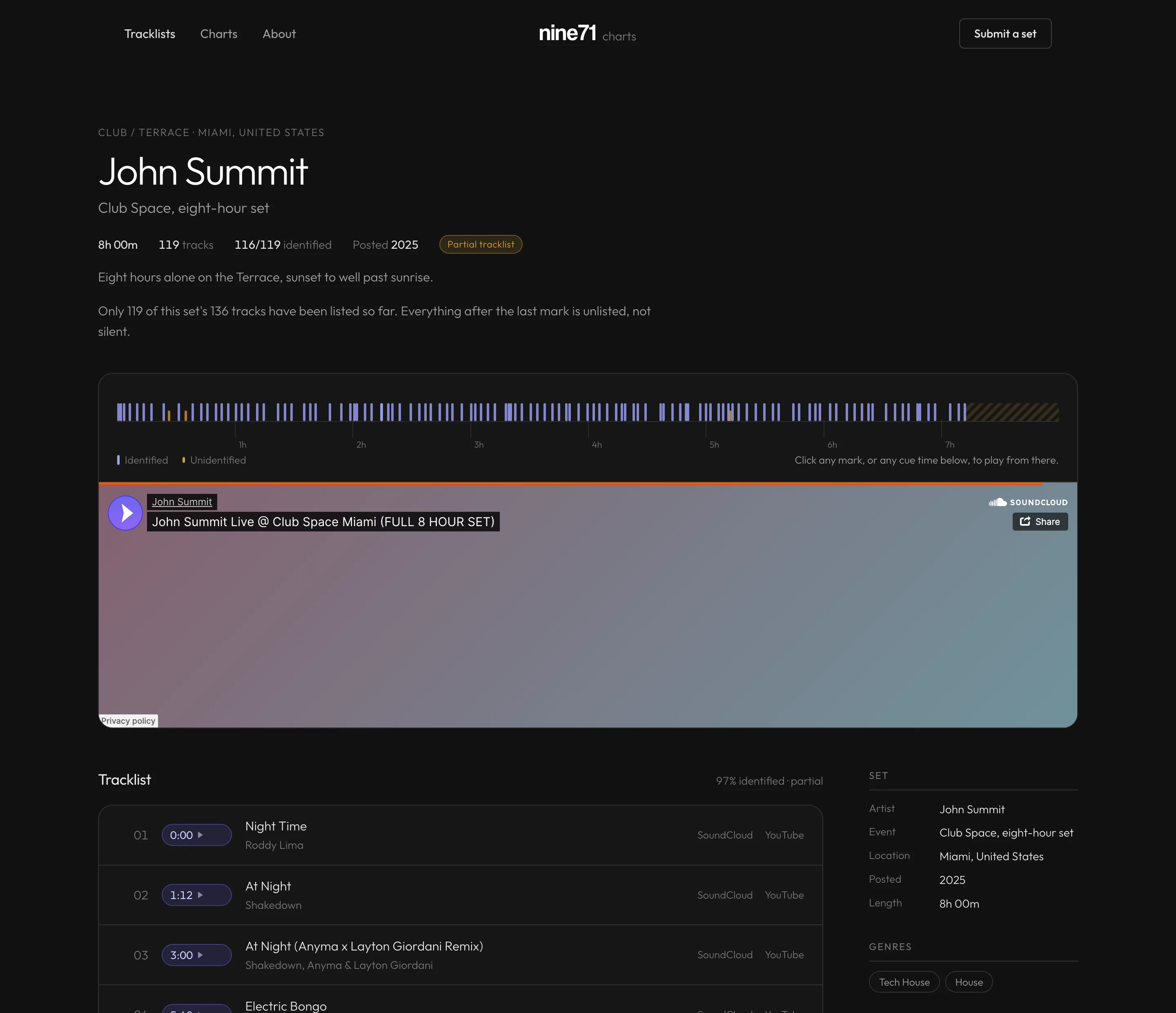
Every track carries the cue time it starts at, and every cue time is a link into the recording. The track you heard at 1:12:40 is one press away rather than four minutes of scrubbing.


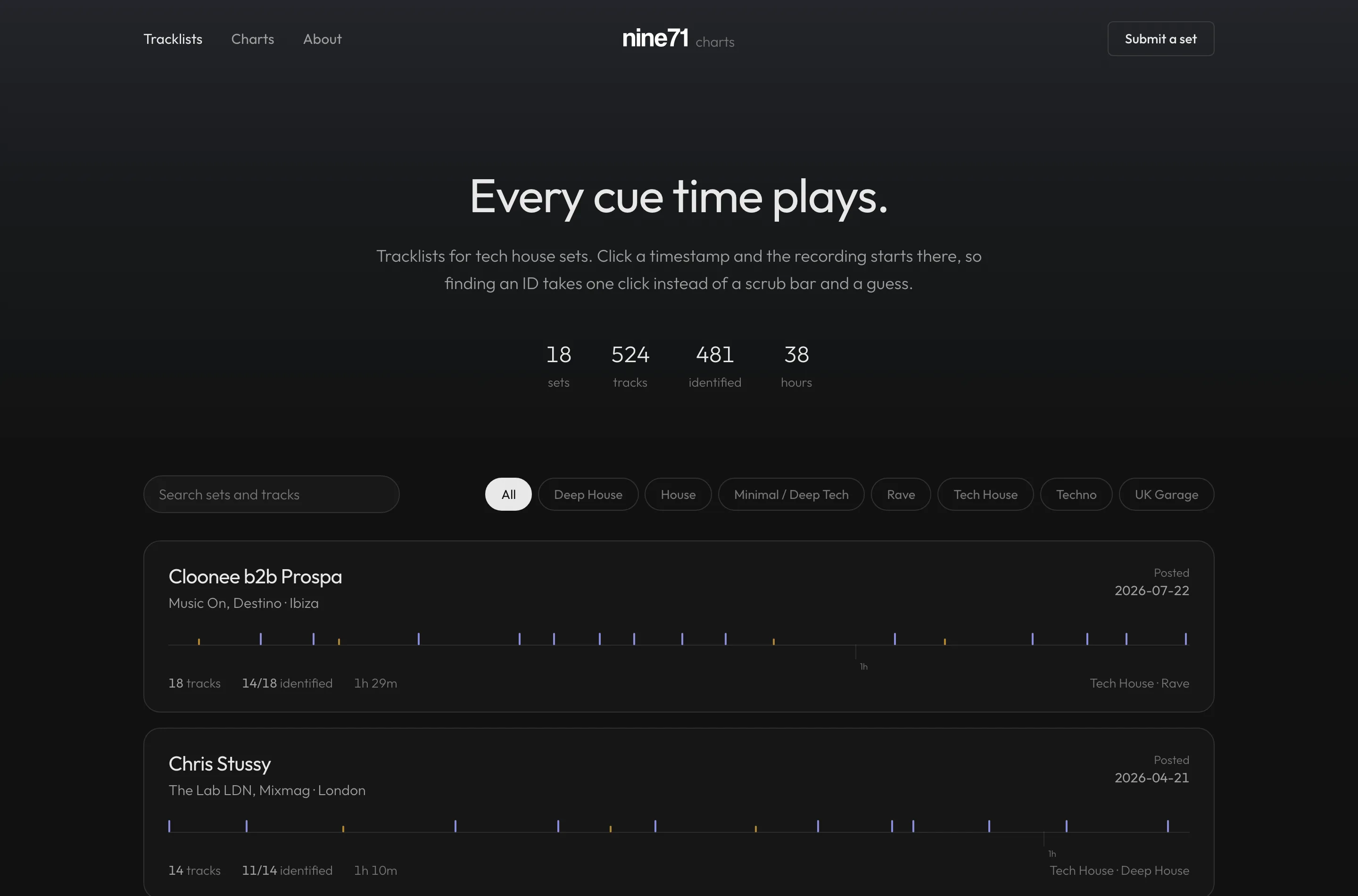
Tracklists for tech house sets. Click a timestamp and the recording starts there, so finding an ID takes one click instead of a scrub bar and a guess. It counts what got played. It measures nothing.
Every track carries the cue time it starts at, and every cue time is a link into the recording. The track you heard at 1:12:40 is one press away rather than four minutes of scrubbing.
Each set carries a ruler of its own cue points, so a four-hour club set looks like four hours before you open it — and a set with eleven marks looks like the sparse list it is.
481 of 524 tracks are named. A set whose list is incomplete says so rather than looking finished, because an index that hides its holes is one you cannot trust on the tracks it does name.
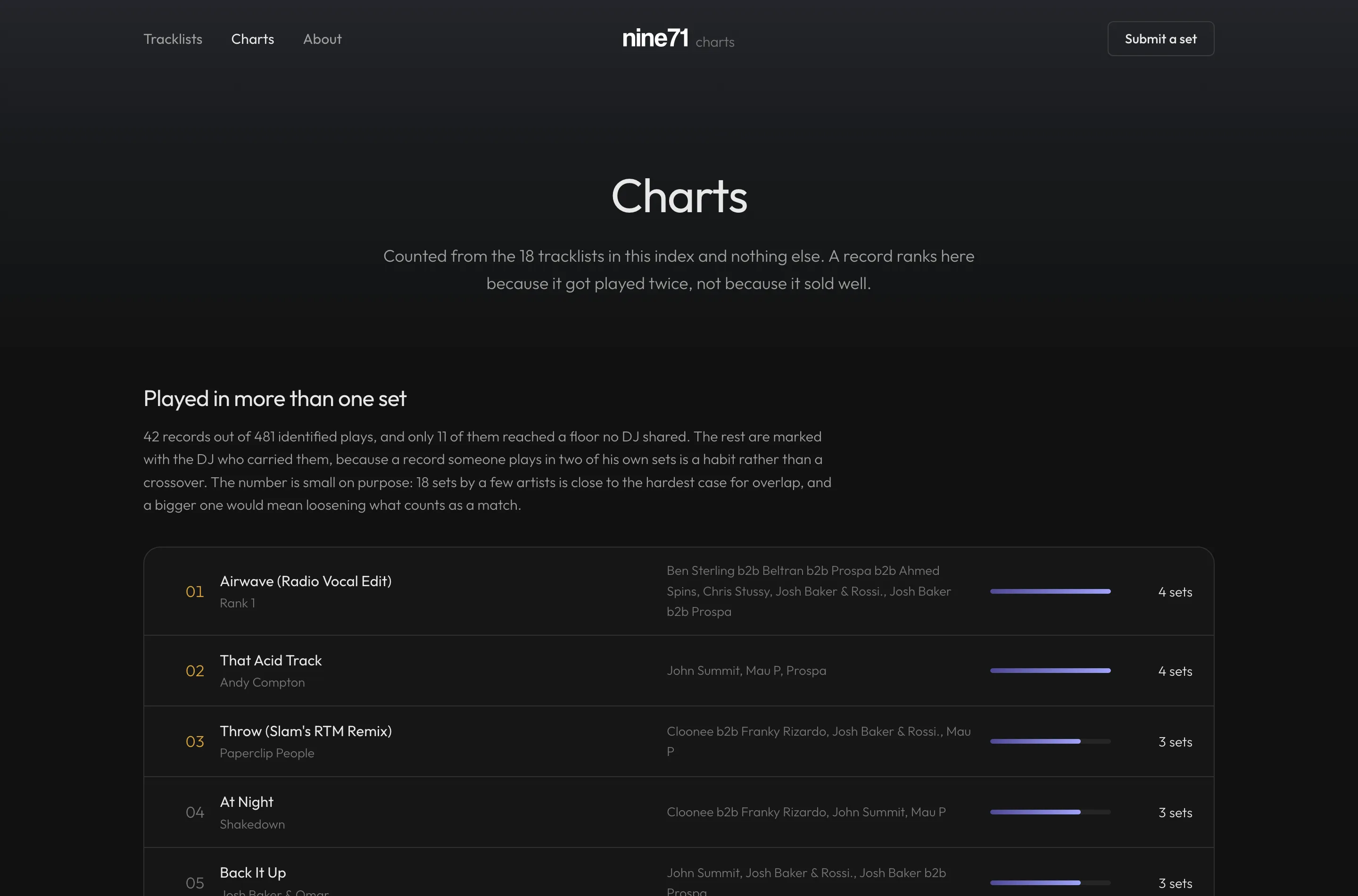
A record appears in the crossover table because a second DJ reached for it. That is the only thing being counted, and it is counted from the index itself.
Every track in the index is recognized from the audio itself rather than typed from a comment thread — and where recognition cannot reach, the index says so instead of leaving a plausible guess in place.
A track is sampled several times across its own run, and a name is only accepted when separate probes return the same record. One hit on one twelve-second window is not enough to print a title.
481 of 524 tracks carry a name. The rest are published as unidentified rather than dropped, because an unnamed record that keeps turning up is the most interesting row in the index — and hiding it would make the list look more complete than it is.
A record appears in the crossover table because a second DJ reached for it in a different set. That is counted from the index itself, which is the only thing here that can be counted.
It does not measure a crowd. What got played and how the floor answered are two different questions, and only the second one needs a camera.
Tracklists are typed by people from recordings. Measuring the response is Signal’s job, it runs on video, and it is a private demo. The two are kept apart on purpose, here and in the products.
Free, no account, no ads. Open nine71charts.com